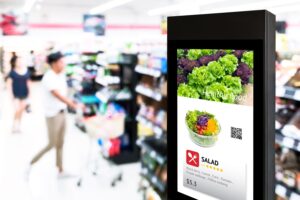
For years now, plain old static menu boards have been replaced with more flexible and vibrant digital counterparts. While they might have initially only popped up in larger fast food chains, they are now affordable enough to have made appearances in even smaller independent restaurants and takeaways.
Essentially, if you haven’t already jumped on the bandwagon, you should probably do so immediately as these digital menu boards are not only easier on the eye and easier to update but can display everything from the menu itself to advertisements, special offers and plenty more besides.
But with the great upheaval caused by the pandemic, what does the immediate future hold for the technology and why should your business be investing in it more than ever?
Adapting to the new normal
No industry was affected by the Covid-19 pandemic quite like the hospitality sector. Indeed, many business owners were forced to completely reorganise their operations in a matter of months. Those that managed to do so successfully were the ones that adapted to the changes catalysed by social distancing and its associated challenges.
Thousands of quick service restaurants closed during the pandemic and when (or if) they opened up again, it was often as a drive-thru or takeaway only service, at least at first. This meant a lack of face-to-face interactions and a far heavier reliance on digital ordering.
Digital menu boards proved a lifesaver for many restaurants in this regard due not only to how easy they were to sanitise but how accurately and flexibly they were able to send and receive information from the restaurant and customers alike.
The rise of the QSR
The quick service restaurant (QSR) sector is thriving in a post-pandemic world of digital menu boards and self-service kiosks. These are the kind of restaurants that benefit most from the technology, as they cut down on waiting times significantly and free up staff to undertake other duties such as preparing and delivering the food.
Many modern screens are also compatible with Android and Apple operating systems and can be controlled from mobile devices. They can also use analytics to make decisions on what to show and what not to show and how to market to customers. Customer data is comfortably the highest priority when it comes to marketing and driving IT strategy so this is very valuable indeed.
What does the future hold?
In the future, we see digital menu signage becoming more than just menus. They will be curated for each guest and adapted to recommend items and further actions based on how and what the customer is ordering, what time of day it is and even what season it is. At Christmas, for example, it might recommend the festive special while at any other time it could recommend an item that there is an extraneous stock of behind the scenes.
It’s going to be all about using data as a key enabler for change and progress and it’s not just McDonald’s and Burger Kings that are going to be using it either. This technology is now within the reach of all independent restaurants too, so, if you have yet to join the digital menu board bandwagon, there’s never been a better time.
Image: TamuT / Shutterstock.com
About author