For years now we’ve all been hearing about “the rise of Industry 4.0” and how technology is going to revolutionise industry on an unprecedented scale. But COVID-19 appears to have put the brakes on many companies as they struggled to shift their expectations in the wake of an unprecedented pandemic. Two years later, however, it might be the ideal time to prepare your factory or warehouse for the future with a full digital refit.
What is industry 4.0?
For the uninitiated, industry 4.0 and warehouse 4.0 are really just buzzwords referring to the overall digital transformation of the traditional workplace environment, at least as far as the world of logistics is concerned. It’s shorthand for the fourth industrial revolution and revolves principally around the following technologies:-
Digital information
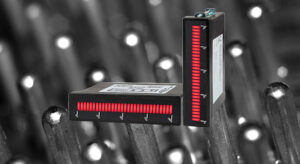
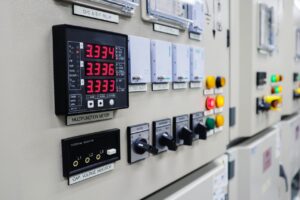
Whereas we once used chalkboards and loudspeakers to communicate with the shop floor, most modern factories, warehouses and distribution centres now come equipped with everything from LED displays providing updates on stock and employee messages to traffic lights for organising workflow and temperature and humidity displays. Production monitoring LED solutions also offer a visual representation of TAKT time – the amount of time spent to deliver consumer demand. This allows for a more streamlined and efficient workflow. All of these solutions offer better safety, optimisation, control and flow of storage and provide a greater level of staff motivation.
The Internet of Things (IoT)
In short, the internet of things refers to all devices and equipment being connected via a network that might or might not be connected to the internet. This doesn’t just mean machines being connected in manufacturing and production departments either but in other operational departments too. If you’ve heard the phrase “smart warehouse” then that’s essentially what we’re referring to here – a completely connected workspace.
Warehouse management
The warehouse management system (WMS) of the future is one that uses data science, augmented reality, artificial intelligence (AI), low-cost sensors and high-level computing to build a robust and automated warehouse system. This is a system that will be able to provide immediate data on what’s been shipped and received, where everything has been sent and where everything else is being stored. This can all be displayed via connected LED display screens and apps that everyone in the workforce can use to track stock at all times.
Automation
It was once thought the stuff of speculative science fiction but today, companies such as Amazon and Ocado have proven that automated machines and drones can comfortably do the jobs of human beings and do them more reliably. Of course, there are always going to be jobs that humans do better and we are always going to need to be around to actually program the machines but there are hundreds of jobs that can be automated now to save businesses’ potential fortunes.
The warehouse of the future
Truly smart warehouses are more than just a warehouse management system and a few digital signs. Yes, that’s a part of it, but the successful warehouses of the future are going to mean taking all of the things above and ensuring they work together holistically in a manner that increases productivity and mitigates the potential for waste and cuts costs.
It’s about using the technology available to give the staff and the customers a better experience. Computers are not going to take over our jobs, you see, they’re just going to make them better!
Image: Zapp2Photo / Shutterstock.com


About author