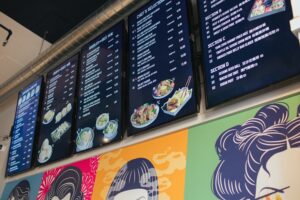
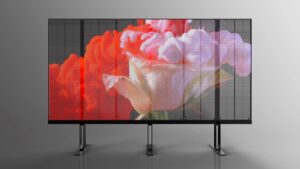
Display technology can be seen everywhere. From the larger scale, cutting-edge transparent screens found in shop windows and inside retail spaces to the smaller, countertop POS displays, the use of display technologies enables brands of all sizes and niches to engage effectively with their target audiences.
When it comes to display technology, devices are generally split into two categories – transmissive and emissive. In this blog post, we shine the spotlight on one particular type of emissive display technology, which, while not new, is as revolutionary as it gets!
What is Direct View LED?
Also referred to as dvLED, Direct View LED is considered cutting-edge in the world of LED displays. Unlike LCD displays that use backlit panels, Direct View LED uses tiny light-emitting diodes that directly emit light to form individual pixels.
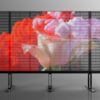
The result is unparalleled brightness, better contrast, wide viewing angles, and improved colour accuracy. The associated displays are pretty streamline too. dvLED displays are often found in seamless, bezel-free designs, making them ideal for creating large-scale, immersive experiences.
Where can dvLED be used?
Thanks to their superior performance, dvLED screens are suitable for several applications. In fact, they can already be found in sports arenas, conference rooms and retail spaces to name but a few commercial settings.
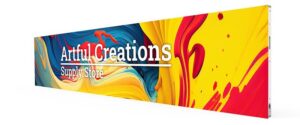
dvLED displays can be manufactured as curved designs, and have been for some time. While their modular nature ensures the flexibility needed to make almost any configuration possible as well as enjoy the highest level of customisation and scalability. dvLED screens can be used indoors and out, with our new range of outdoor dvLED shop fascias delivering incredible brightness and contrast for any shop front.
How big can you go with dvLED?
The technology behind dvLED means there are very few constraints when it comes to size. How big or small a display is however depends on the main type of LEDs utilised by the display. A large dvLED screen could incorporate three types of LEDs, namely Dual In-Line Package (DIP), Surface Mount Device (SMD) and Chip On Board (COB).
These primary LED technologies differ in size, with the pixel pitch of each varying. DIP is much older and used less often in the modern day as a result. DIP LEDs have a particularly limited market, with this LED type mainly used in the USA where they want as much screen as possible for as little money as possible. It is still available on some products requiring more specialist capabilities (such as extended temperature ranges). Larger format DIP LEDs also have a larger pixel pitch, and while less readily available, are simpler to build and service.
Smaller COB LEDs have a smaller pixel pitch, making individual pixels less distinguishable for a better visual experience. These are costlier to buy as there are more LEDs per square metre. SMD is much brighter than COB, which is typically never used outside and offers a better experience when viewed up close, i.e. behind a reception desk rather than high up in an auditorium. SMD LEDs are the go-to for larger screens.
Choosing the LED technology that is right for your project comes down to size and application.
Which dvLED technology is right for me?
Deciding which dvLED technology is right for your application often comes down to your desired display size and budget. That’s not to say pixel pitch doesn’t have a role to play; Spectra can help you select the best options based on the viewing distance of your target audience using the ‘10x Rule’ which dictates that the average viewing distance should be roughly 10 times the pixel pitch.
For example, if you are looking to kit out a conference room with an average viewing distance of 12 feet, 1.5mm to 1.9mm would be an adequate pixel pitch.
Ready to shop indoor and outdoor dvLED displays?
You don’t have to search too far to find the Direct View LED technology you’ve been looking for. Browse our selection of dvLED displays here or contact us directly to discuss your requirements.
About author